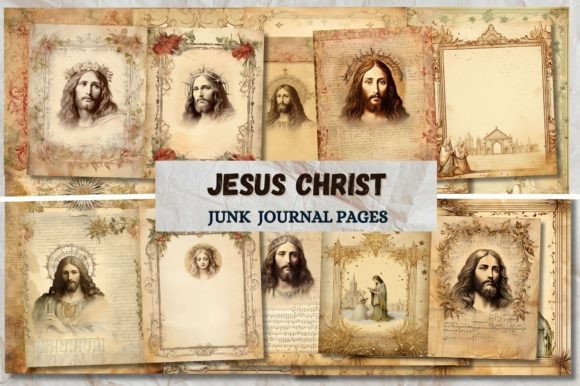
Jesus Christ Junk Journal Pages and Print Templates
As a blog designer and digital publisher, I’m always on the lookout for high-quality graphic design assets that can elevate the visual appeal of content. Jesus Christ Junk Journal Pages is one such asset that offers a unique blend of creativity and practicality. Designed with editorial quality in mind, this print template set brings a fresh perspective to website presentation, reader trust, and content marketing.
The First Impression: A Visual Statement
When first encountering Jesus Christ Junk Journal Pages, the editorial mood is immediately striking. The design exudes a sense of artistic expression, making it ideal for content niches that lean into lifestyle, faith-based themes, or creative storytelling. It feels both modern and decorative, offering a balance between bold visuals and clean layouts. This makes it particularly well-suited for blogs, newsletters, and digital guides that aim to inspire or engage a specific audience.
The visual language of Jesus Christ Junk Journal Pages suggests a focus on personal reflection, spiritual growth, and creative exploration. Its aesthetic aligns well with content that values authenticity and emotional connection, whether it’s a devotional blog, a journaling resource, or a printable design for small business branding.
Real-World Publishing Applications
Jesus Christ Junk Journal Pages can be seamlessly integrated into various publishing workflows. As a blog graphics tool, it’s perfect for creating featured images, Pinterest pins, and article headers that stand out on social media and search engine results. Its design elements can also serve as website banners, editorial layouts, and newsletter graphics, ensuring a cohesive visual identity across platforms.
For content creators, this asset works well as a lead magnet, downloadable printable, or digital guide. It can be used to create eBook covers, worksheets, and Canva templates that enhance the user experience. Whether you're producing a content upgrade or a downloadable resource, Jesus Christ Junk Journal Pages provides a polished foundation that supports professional-looking output.
In affiliate marketing, these pages can be adapted into social media graphics, digital ads, and promotional materials that maintain brand consistency while capturing attention. Their versatility makes them a valuable addition to any digital product strategy.
Boosting Content Performance
One of the most compelling aspects of Jesus Christ Junk Journal Pages is its ability to strengthen a content strategy. By improving the first impression of a blog post or landing page, it increases the likelihood of engagement and click-through rates. The clear visual hierarchy ensures that key messages are easily digestible, helping readers navigate through complex content with ease.
This design asset also contributes to stronger brand identity. When used consistently across different platforms—such as website headers, social media previews, and email campaigns—it reinforces a recognizable visual presence. This consistency builds reader trust, which is essential for long-term content marketing success.
Additionally, Jesus Christ Junk Journal Pages supports better category recognition. By using consistent design elements across related posts or sections of a website, it helps users quickly identify and explore content that aligns with their interests.
Where It Shines: Key Use Cases
Jesus Christ Junk Journal Pages excels in several areas. It’s ideal for hero images that grab attention, article thumbnails that encourage clicks, and Pinterest pins that drive traffic. As an editorial accent, it adds depth and interest to content without overwhelming the reader.
It also works well as a content upgrade, such as a downloadable printable or a digital guide. In newsletter headers, it sets the tone for the content that follows, and as a social media preview, it enhances the visual appeal of posts that link back to your website.
Where to Use with Caution
While Jesus Christ Junk Journal Pages is versatile, there are scenarios where it may not perform as effectively. On small mobile thumbnails, the intricate details might get lost, reducing its impact. Text-heavy blog images could benefit from simpler designs that prioritize readability over decoration.
In serious professional niches or corporate content, the style may feel too playful or decorative. Similarly, low-contrast backgrounds or busy layouts might clash with the design, making it less effective. For websites that rely on minimalism, this asset may not align with the desired aesthetic.
Publisher Notes: Practical Tips for Success
To ensure optimal performance, test Jesus Christ Junk Journal Pages on both desktop and mobile screens. Check how it looks as a thumbnail and preview it within a real blog layout. Test it with headline text to see how it complements your content.
Review contrast and readability, especially when using it with different font styles. Try it alongside serif, sans serif, script, handwritten, and display fonts to determine what works best for your brand. Also, check file size for web performance and compress images properly before uploading.
Before using it on monetized websites, affiliate pages, or paid content products, confirm that the commercial license allows for such use. This is crucial for maintaining compliance and avoiding legal issues.
Final Thoughts: A Valuable Addition to Your Design Toolkit
Jesus Christ Junk Journal Pages is more than just a print template—it’s a powerful graphic design asset that can transform the way your content is presented. From blog graphics to editorial design, it offers a range of benefits that support content marketing, small business branding, and digital downloads.
Whether you’re working on a digital guide, a lead magnet, or a social media campaign, this asset provides the creative design and visual hierarchy needed to make your content stand out. With careful consideration of its strengths and limitations, it can become a cornerstone of your web design and content publishing strategy.